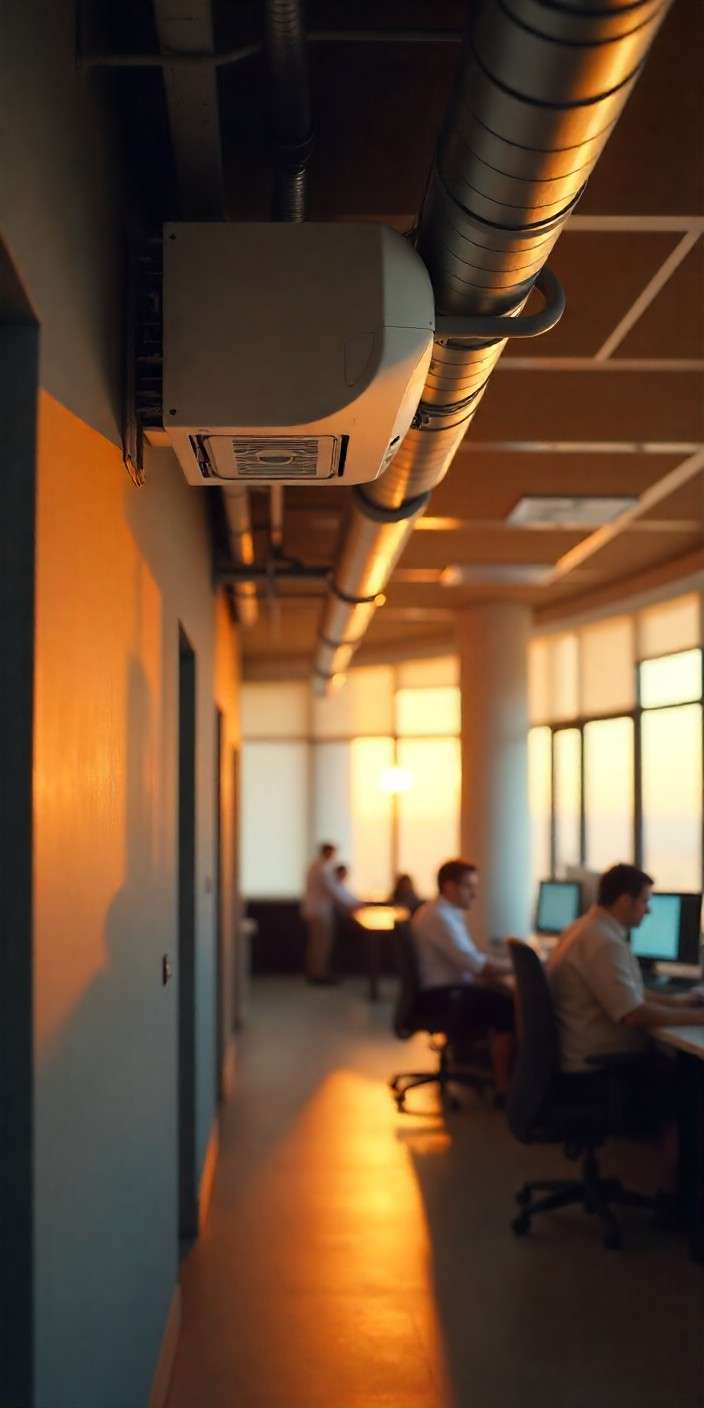
In the HVAC ecosystem, chillers and compressors often steal the limelight when discussions around performance and energy savings arise. However, the Air Handling Unit (AHU) the unsung workhorse of your HVAC system plays a far more critical role than it’s often given credit for.
Despite being central to air distribution, indoor air quality (IAQ), and thermal comfort, AHUs are frequently neglected when it comes to optimization, predictive maintenance, and automation. At MG Cooling Solutions, we believe that optimizing AHUs is the easiest and most effective first step toward building a high-performing HVAC system.
Why AHU Optimization Should Be a Priority
An inefficient or poorly maintained AHU doesn’t just underdeliver it actively drains your system’s energy efficiency and operating lifespan. Here’s what could go wrong with an underperforming AHU:
- Uneven cooling and temperature fluctuations across different zones
- Poor indoor air quality due to inadequate ventilation
- Higher fan and motor energy consumption
- Overburdening of other HVAC components, reducing their life expectancy
These issues don’t just impact comfort they significantly inflate energy bills and maintenance costs, especially in large commercial buildings, hospitals, educational campuses, malls, and manufacturing facilities.
The Real Benefits of AHU Optimization
When you apply smart control logic, sensor-based monitoring, and routine maintenance, the AHU transforms into a high-efficiency component that supports your sustainability goals.
Here’s how AHU optimization delivers real impact:
1. Automated Operation Based on Return Air and Water Temperature
MG Cooling Solutions deploys four temperature sensors across each AHU system:
- Chilled Water Inlet
- Chilled Water Outlet
- Return Air Temperature
- Supply Air Temperature
These sensors feed real-time data to the controller. Based on the temperature differential, the system automatically adjusts the actuator opening of the chilled water valve to maintain the desired supply air temperature.
This ensures the AHU runs only as much as needed maximizing efficiency and minimizing energy use.
2. Filter Clog Detection with Real-Time Alerts
Clogged filters lead to restricted airflow, forcing the fan to work harder and consume more power.
With IoT-enabled sensors, facilities get real-time alerts when pressure across the filter increases making maintenance proactive instead of reactive.
3. Fan Runtime Scheduling
Running fans at full speed during off-hours or weekends is wasteful. AHU optimization includes scheduling runtimes or operating in low-speed modes during non-peak hours without compromising on air quality.
4. Air Circulation Logic for Better IAQ
AHUs with advanced controls can adjust outside air intake, recirculation, and damper positioning based on CO₂ levels or occupancy. This ensures optimal indoor air quality vital for spaces like hospitals, schools, and offices.
AHU Upgrades: The Lowest-Hanging Fruit in HVAC Efficiency
Compared to chillers or VRF systems, AHUs are easier to retrofit. Optimizing them:
- Requires less capex than complete HVAC revamps
- Has quicker implementation timelines
- Provides immediate ROI through reduced energy consumption
- Helps align with ESG and green building goals
At MG Cooling Solutions, we’ve implemented AHU upgrades in data centers, malls, pharma plants, and government buildings, delivering quantifiable savings in power consumption, carbon emissions, and system downtime.
Whether You’re Retrofitting or Designing New Start with the AHU
If you’re planning to modernize your facility’s HVAC or build one from scratch, AHU optimization should be your starting point. With the right balance of temperature-based control logic and engineering expertise, this one step can unlock long-term energy efficiency across your facility.
Don’t Miss: Protect Your Data Center: Why Gaseous Filtration is Critical to Prevent Costly Downtime
Want to know how AHU upgrades can improve your facility’s performance? Reach out to MG Cooling Solutions for a tailored HVAC efficiency audit.
Email: hina.gupta@mgcs.net.in
Call: +91-9873270427