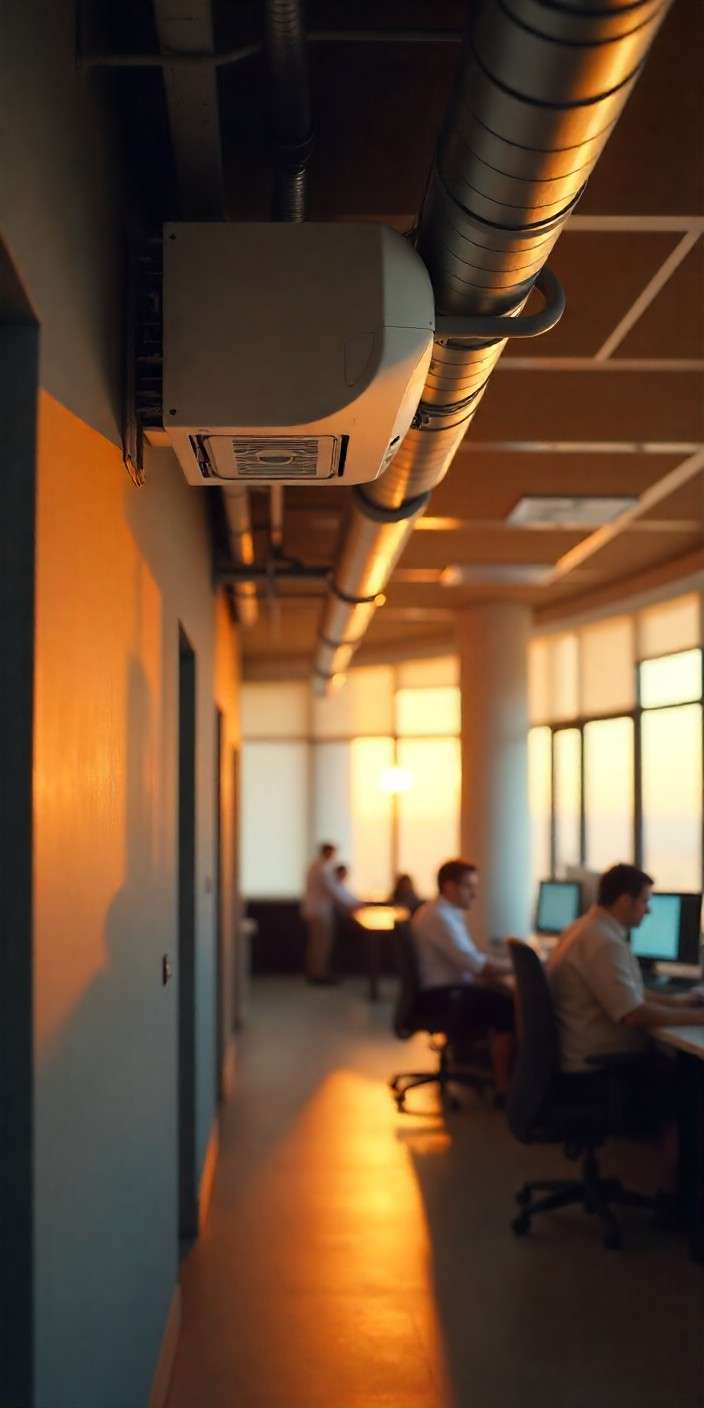
The Limits of Standard HVAC Systems
Many corporates assume that their central HVAC system automatically ensures good indoor air quality. The truth is that HVAC was primarily designed for temperature control and comfort, not for managing hazardous levels of fine particulate matter (PM2.5) and gaseous pollutants that dominate Delhi-NCR’s winter smog. Standard filters in HVAC systems typically capture only large particles such as dust and pollen, while the most harmful pollutants – ultrafine particles and volatile organic compounds – pass straight through.
The Technical Gap in Indoor Air Protection
During the smog season, PM2.5 concentrations outdoors often rise above 300–400 µg/m³. A conventional HVAC filter, often equivalent to MERV-8 or lower, cannot trap particles smaller than 3 microns effectively. What this means is that even with HVAC running, employees are still breathing in pollutants at levels far higher than the safe threshold of AQI 50 or WHO’s PM2.5 guideline of 15 µg/m³ (24-hour).
In addition, HVAC systems rely on recirculated air. Without adequate purification, this air quickly accumulates carbon dioxide, VOCs from building materials, and bioaerosols, further degrading indoor quality.
Upgrading HVAC for Real Indoor AQI Control
To transform HVAC into a true indoor air quality system, corporates must integrate additional layers of protection:
- High-efficiency filters (MERV-13 and above) that capture PM2.5 and smaller particles.
- Activated carbon or chemical filters that absorb harmful gases and odors.
- Sealed ducting and AHU retrofits that eliminate leakage paths for unfiltered outdoor air.
- Portable HEPA purifiers in dense workspaces to provide targeted clean-air zones.
- IoT-based sensors and dashboards that measure real-time AQI, CO₂, and VOC levels to guide operations.
These upgrades convert HVAC from a comfort system into a critical health and ESG compliance tool.
Indoor Air Quality and ESG Responsibility
Safe indoor air is not only an engineering requirement but also an ESG responsibility. Under the Social pillar of ESG, companies are expected to protect the health and well-being of their employees. Reporting frameworks increasingly call for disclosure of workplace health measures, and indoor air quality is an area where corporates can demonstrate clear, measurable action.
From an environmental perspective, optimized HVAC with advanced filtration can also improve energy efficiency, reducing unnecessary ventilation loads while maintaining safe indoor AQI. This strengthens the “E” in ESG by aligning air quality initiatives with sustainability goals.
Why Action Cannot Wait
Ignoring HVAC limitations exposes employees to hazardous indoor air for 8–10 hours a day. The costs appear in the form of higher absenteeism, reduced cognitive performance, increased healthcare claims, and reputational damage to the employer brand. With outdoor pollution worsening each year, corporates cannot afford to rely on outdated HVAC strategies.
How MG Cooling Solutions Helps
At MG Cooling Solutions, we specialize in upgrading corporate HVAC systems into smart, air-quality-driven infrastructure. We deliver end-to-end programs that include AHU retrofits, advanced filtration, IoT-based monitoring, and severe-day operating playbooks. With our approach, corporates can achieve indoor AQI below 50, protect employee health, and meet ESG obligations with measurable outcomes.
This September is the time to act. Do not wait for the smog to expose the gaps in your HVAC system. Book a free AQI and HVAC readiness assessment with MG Cooling Solutions today and make your workplace a model for both health and ESG compliance.
Don’t Miss: Indoor Air is More Toxic Than Outdoor: Why Corporates Must Act Now
Conclusion
Relying solely on HVAC systems is insufficient for safe indoor air. Corporates must adopt additional measures like air purifiers, regular maintenance, and monitoring to ensure healthy, contaminant-free workplaces, protecting employee well-being, boosting productivity, and maintaining a safe, compliant, and sustainable indoor environment.